A couple of weeks into my trip research, it occurred to me that I hadn’t come across a Barcelona history museum.
I found museums dedicated to Picasso and Miró, Banksy (unauthorized and unlicensed), Gaudí, fashion and design, modern art — even a prison, now operating as a museum!
I thought, that can’t be right. Surely, I was missing something.
So I did what any modern person does when they have a question: I Googled it.
Immediately the Museu d’Història de Barcelona popped up, which even my remedial foreign language skills understood to mean Barcelona History Museum, fondly called MUHBA for short.
Bingo! Mystery solved.
Except it wasn’t the one-stop shop I had been expecting.
MUHBA is actually a network of seventeen heritage sites, some small, some large, scattered around the city. These sites span nearly 2,000 years of Barcelona’s history, from first-century Roman ruins to Civil War bunkers, workers’ housing and former textile factories.
In a way this allows for Barcelona itself to function as a living museum, with places frozen in time, providing a continuous glimpse into its layered past.
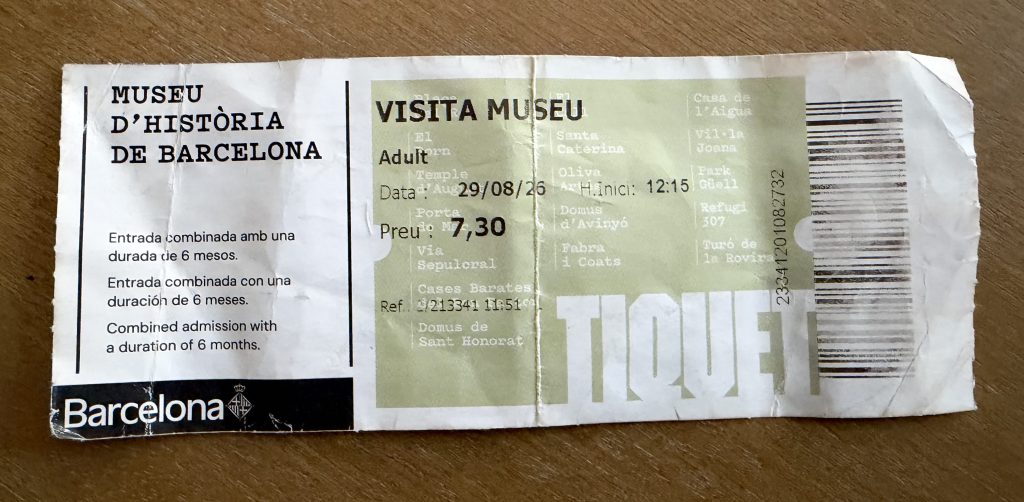
Conveniently, they offer a combination ticket, which grants access to its sites for the fair price of 7.30 euros and lasts six months. The exception is Park Güell, which is operated by MUHBA but requires its own admission ticket.
For me, this little paper ticket became my pass to the past for the next month.
With a little research, I learned the best place to begin was Plaça del Rei, where you can purchase the combo ticket and tick off one of the larger sites.
This sprawling complex has served as the founding core of the MUHBA network since 1943.
The area reveals Barcelona in stages, beginning with Roman Barcino, continuing through Visigothic Barchinona and eventually reaching the medieval city built above them.
After exploring the exhibits inside, I made my way underground.
I walked along metal pathways suspended above Roman streets and defensive walls, as well as the remains of a laundry and dye workshop, a winemaking facility and a factory that produced salted fish. Farther along, the Roman city gave way to the remains of an early Christian baptistery and episcopal complex.
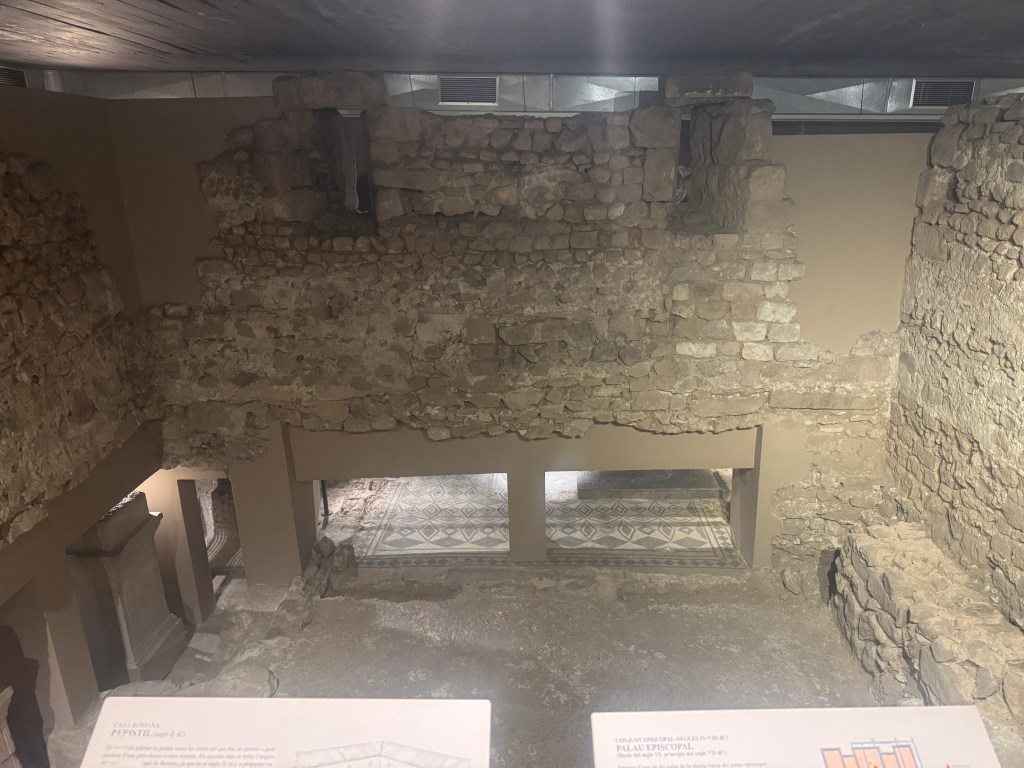
These were the first ancient ruins I had ever visited, making it especially surreal to imagine people living and working where I stood centuries later.
Above ground, Plaça del Rei has just as much to offer.
The plaza includes the Palau Reial Major, once the residence of the Counts of Barcelona and Kings of Aragon, along with highlights such as the Lieutenant’s Palace, Throne Room and Santa Àgata Chapel.
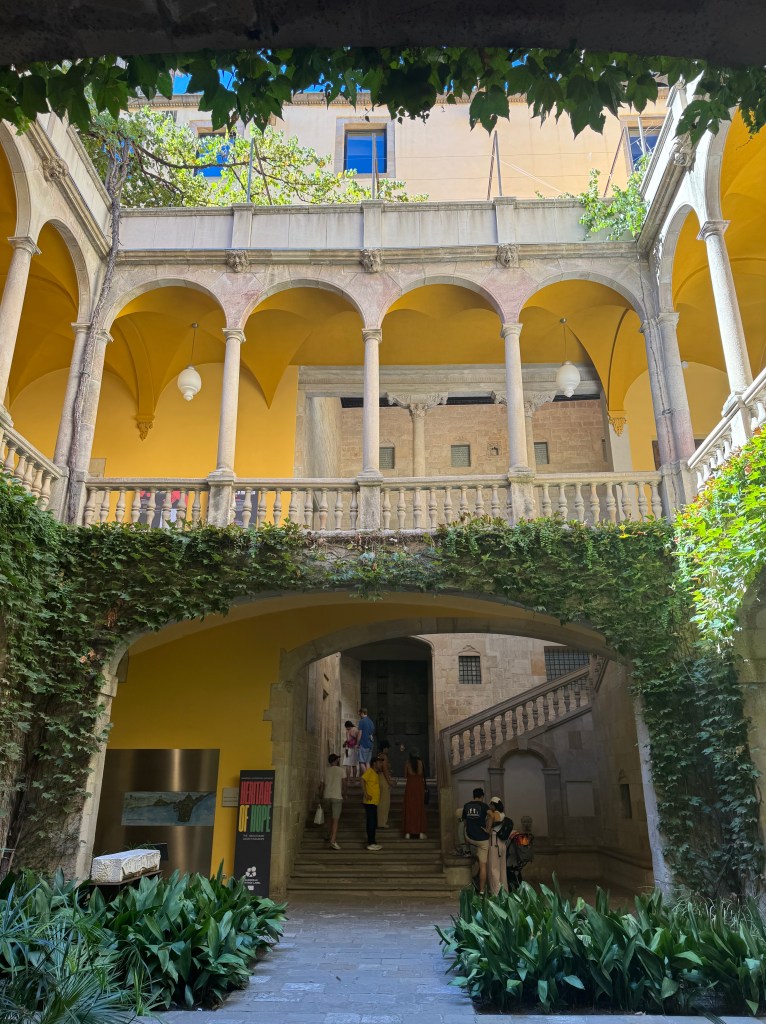
I had secretly hoped Catherine of Aragon would make an appearance somewhere in the palace’s history but unfortunately, she never lived here. However, her parents, Ferdinand II and Queen Isabella, did receive Christopher Columbus at the palace in 1493 after he returned from his first journey to the Americas.
Or at least that’s what tradition holds to be true!
Because the plaza was centrally situated in the Gothic Quarter, I wandered through it often on my walks to or from home, admiring the architecture and never forgetting what lurked beneath.
Actually, living in the Gothic Quarter provided the perfect opportunity to check out the other MUHBA sites clustered throughout the neighborhood.
Throughout my month, I was able to hit seven out of eight.
Some of my quickest visits were to the smallest spaces, yet they remain at the forefront of my mind.
The Temple d’August, dating to the first century AD, once towered over the center of Roman Barcino. Now, all that remain are four Corinthian columns, lost for centuries until they were rediscovered during building renovations.
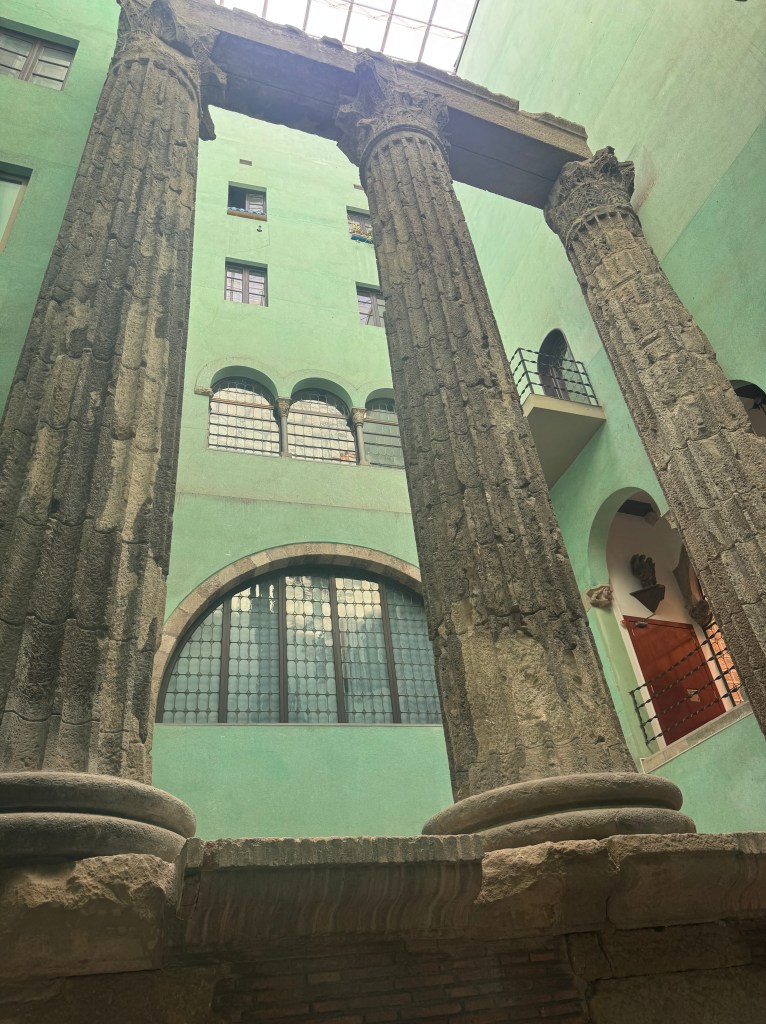
It was another example of Barcelona’s history hiding in plain sight.
The Domus houses are also small in size but worth a visit.
Domus d’Avinyó is known for its wall and ceiling frescoes, painstakingly collected from rubble, pieced back together and returned to where they would have stood 2,000 years ago. The larger Domus de Sant Honorat combines the ruins of a wealthy Roman home and commercial premises with silos dating to the 13th and 14th centuries—a great example of Barcelona’s layered history.
Funnily enough, Porta de Mar was one of the heritage sites that I just kept passing, without even seeking it out.
This viewing space preserves the remains of a public bath built between the first and second centuries. It also boasts a surviving portion of the Roman wall with two towers, visible from the courtyard of the Pati Llimona Center and a section of the Porta de Mar gate. This important gate once provided pedestrian access into and out of the city from the direction of the Mediterranean.
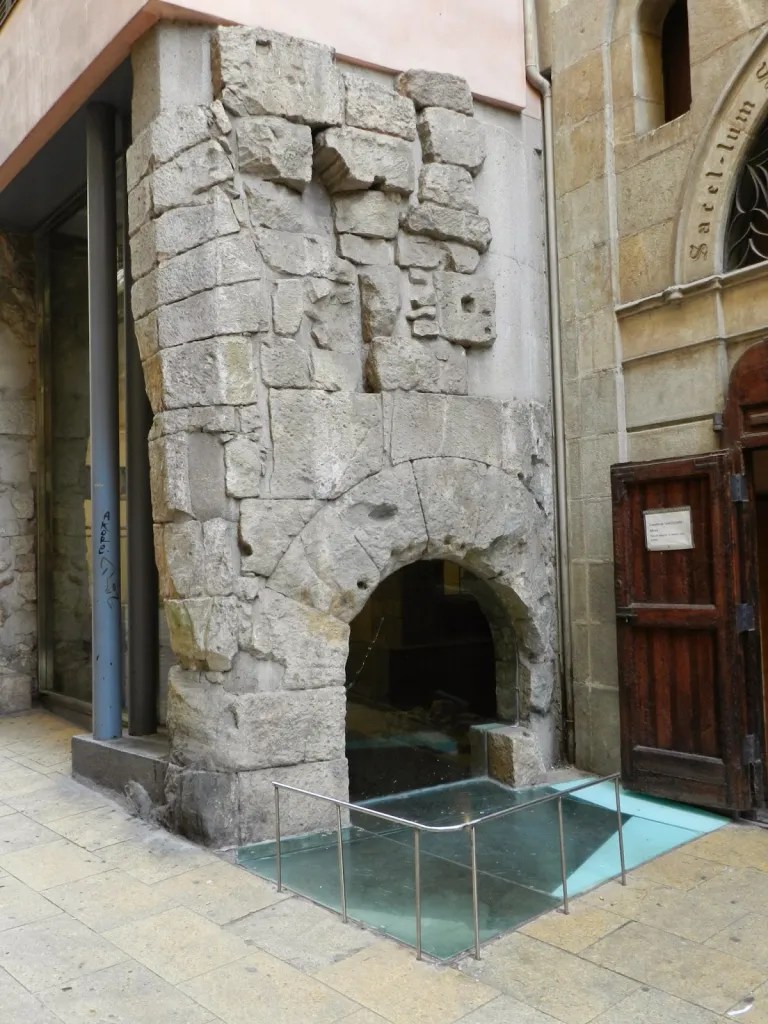
It finally made sense that I kept passing it: for a month, I had, unknowingly, been following this same 2,000-year-old route during my own travels in and out of the old city.
Barcelona’s Gothic Quarter also contains the remains of the city’s medieval Jewish quarter, known as El Call, a term meaning “tiny alley” that later came to describe the streets where the Jewish community lived.
The neighborhood is home to El Call Museum, a small but informative stop along the MUHBA tour that takes about forty minutes. The museum explores the rise and development of Barcelona’s medieval Jewish community, as well as the devastation caused by the 1391 attack on the Jewish quarter.
I left with a better understanding of the daily lives, achievements and struggles of the people who once occupied this area.
What I learned stayed with me as I navigated through this neighborhood throughout my month stay.
Street names like Carrer de Salomó ben Adret, celebrating a well-known rabbi and something of a medieval “Dear Abby,” carried meaning, while the buildings towering above me conjured images of former residents living tightly packed together but thriving as a community.
A unique thirty-minute MUHBA stop is Via Sepulcral, a Roman burial road. Roman law prohibited burials within the city, so tombs were placed along secondary roads outside the walls.
The area was rediscovered in the late 1940s and has an outdoor viewing space and small indoor museum.
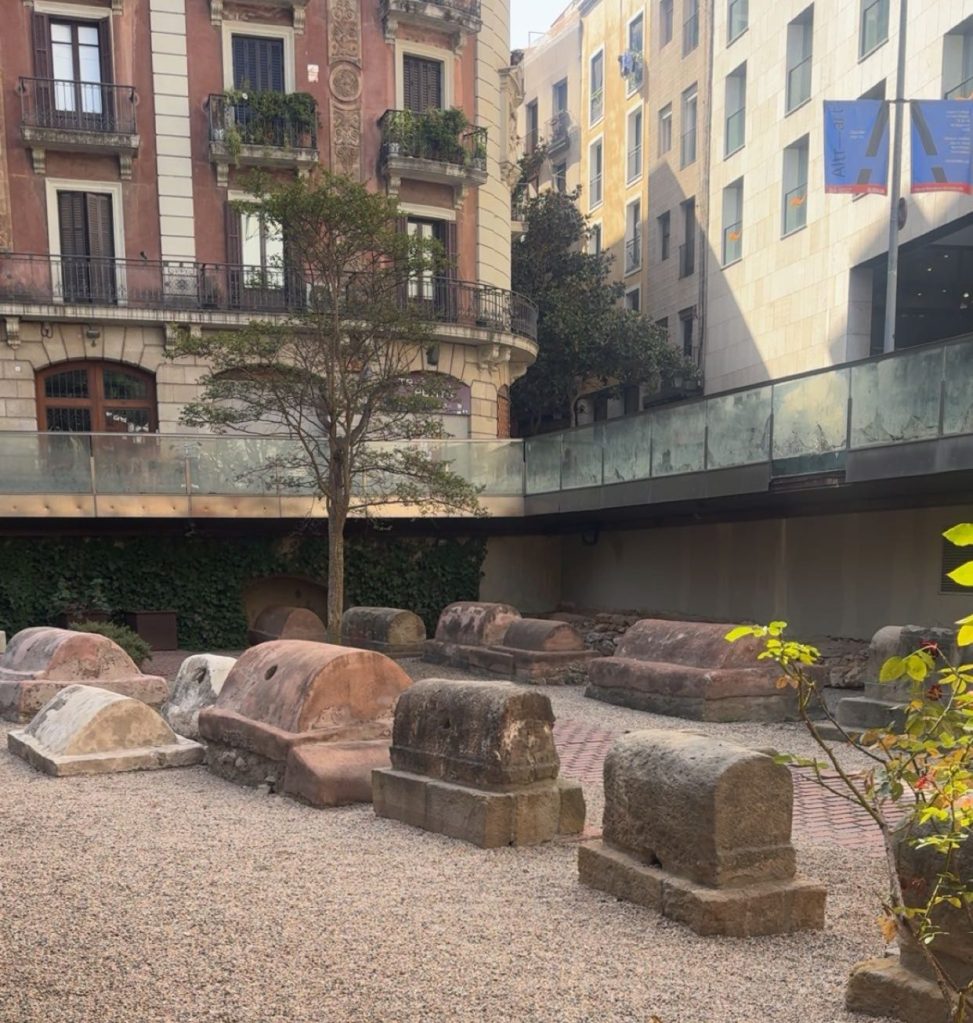
In my opinion, the museum portion is worth it for anyone who enjoys learning about burial rituals and dead things—which I do!
The final stop on my MUHBA tour took me to a place outside of the Gothic Quarter and long associated with the selling of goods.
For centuries, Plaça del Born functioned as an open-air marketplace before business moved indoors with the opening of Mercat del Born in 1876. With its cast-iron columns, metal trusses, glass slats and glazed-tile roof, it became Barcelona’s first major market of its kind and part of the city’s push toward modernization.
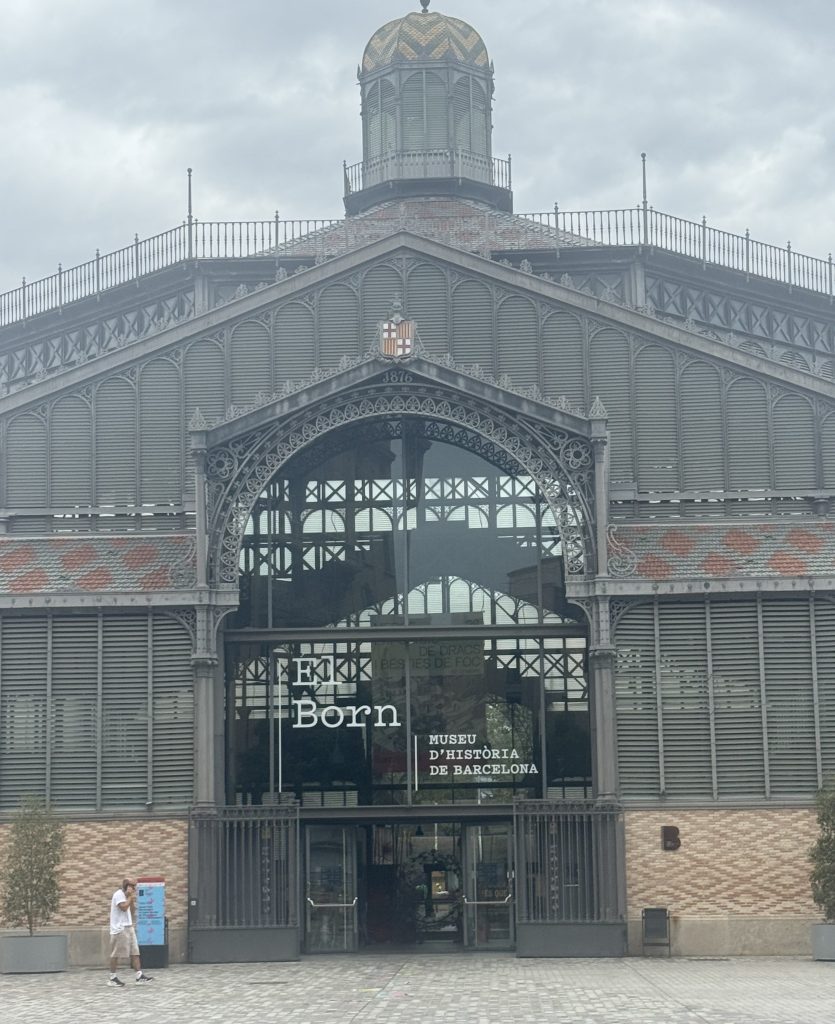
In keeping with city tradition, the market was built above a portion of the La Ribera neighborhood, once a bustling home to craftspeople, fishermen, sailors and other skilled workers. After Barcelona’s defeat in 1714, this section of La Ribera was deliberately demolished to create an open military zone around the new Ciutadella fortress.
The construction of El Born Market allowed for the city to reclaim part of its land lost to turmoil and return it to public use.
The market remained in operation until it ultimately closed its doors in 1971.
Excavations uncovered the 18th-century ruins in the early 2000s, and the site reopened to the public in 2013.
Today, the market stands as a reminder of the city’s layered past.
Despite staying an entire month, I wasn’t able to visit all of the MUHBA sites I had originally earmarked.
Refugi 307, an air-raid shelter from the Spanish Civil War, and Turó de la Rovira, another remnant of the war, were on my list and ultimately remained unticked.
But of all the MUHBA sites I missed, the Cases Barates del Bon Pastor is the one I regret missing the most.
The museum preserves a row of the Cases Barates—literally, “Cheap Houses”—built in 1929 for working-class families, many of whom had arrived in Barcelona during the city’s industrial and construction boom.
The name itself feels revealing: a reminder that housing for the working class has often been defined by what authorities determined was good enough.
Rather than telling history from the perspective of rulers and monuments, this heritage site—developed in collaboration with local residents—traces nearly a century through kitchens, furniture, and family photographs of the people who once called it home.
Living in Los Angeles, where ordinary people are being priced out every day, sites like the Cases Barates remind us that while the circumstances may have changed, the question remains the same: Where, in a crowded and increasingly expensive city, are working-class people supposed to live?
Ready to plan your own MUHBA tour?
Luckily, MUHBA has a helpful website with each site’s history, admission price, hours and location. I highly recommend consulting it both when planning your itinerary and shortly before your visit, as I quickly discovered that the hours listed on Google are more of a guess than a guarantee. Some of the smaller sites have particularly limited opening hours. The Domus houses, for example, are only open on Saturdays and Sundays from 10:00 to 14:00.
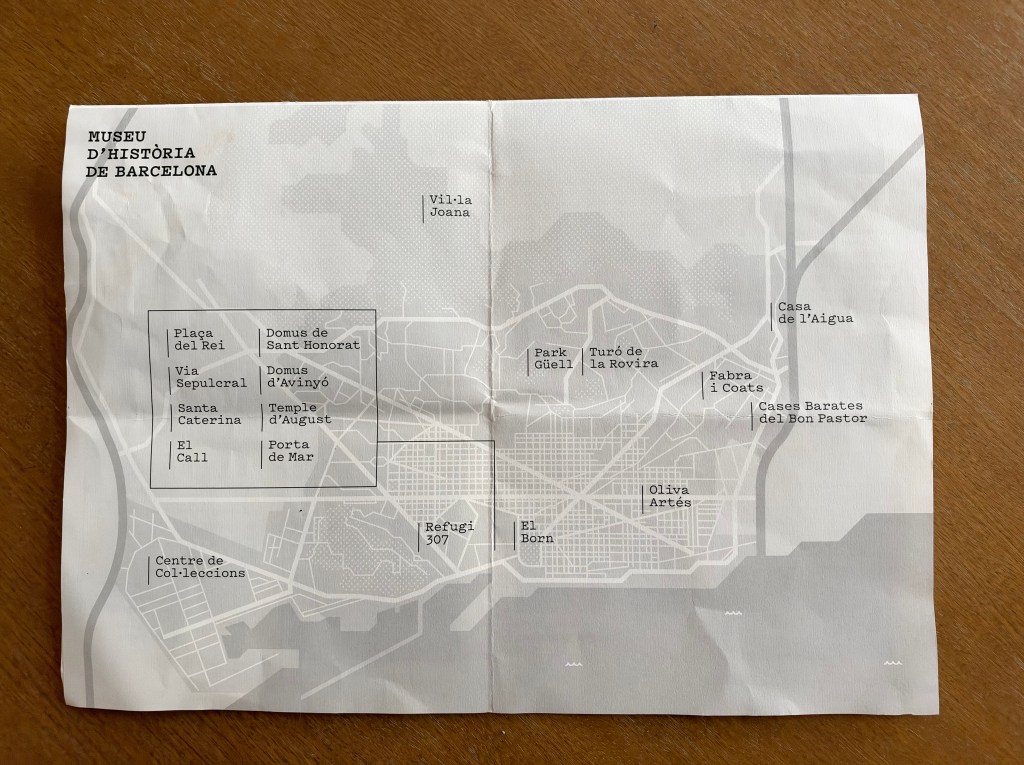
Admission can also be confusing. Some sites are free, while others charge a small fee. Temple d’August is completely open to the public, whereas the tombstones at Via Sepulcral are viewable from the street but the museum charges a few euros to enter. Personally, I recommend simplifying matters and buying the combination ticket.
There is no denying that seventeen sites scattered across a large city presents a logistical challenge. For a visitor with only a couple of days in Barcelona, I would recommend starting at Placa de Rei and sticking to the Gothic Quarter. Several sites are clustered together creating an opportunity to see a few places at a time depending on your stamina for history.
If you’re more interested in some sites further from the city center, I suggest picking your must-sees and piggybacking your visit with other attractions, like a must-try restaurant to help maximize your time.
In Barcelona, my little paper MUHBA ticket became my pass to the city’s past. It led me beneath Roman streets, through the remains of Jewish Barcelona and into the homes and workplaces of ordinary people across nearly 2,000 years.
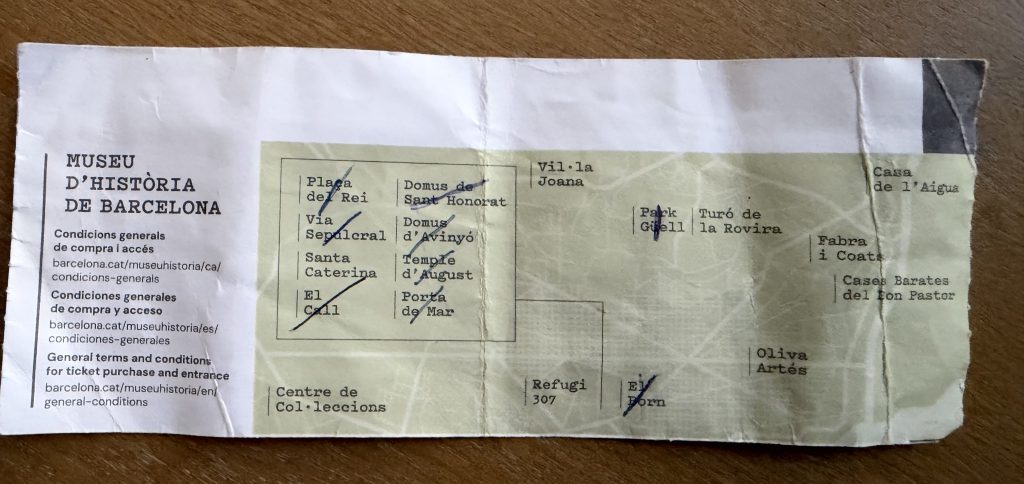
In a city continuously rebuilding and reinventing itself, MUHBA preserves the layers that might otherwise be easy to walk past. And with eight sites still left unexplored, there is clearly much more waiting for it to teach me—and one more reason for me to return.



Leave a Reply