Despite choosing to not venture to other countries during my thirty-day stay in Barcelona, I knew I wanted to take a few day trips to nearby destinations. I earmarked several possibilities, each offering a unique experience beyond the city, including Sitges, Girona, Tarragona and Montserrat.
While the majority of my trip was planned as a solo adventure, I initially extended the invitation to some of my friends.
The offer was tempting: book your flight and stay in the second bedroom of my Airbnb free of charge.
Pretty good deal, if you ask me.
My friend Camerina was one of two friends who took me up on my generous—just kidding—offer.
During her stay, I decided the two of us would take the pending day trip to Girona.
Located approximately 62 miles northeast of Barcelona, Girona is easily accessible by train.
The city gained some international recognition as a filming location for Game of Thrones—a show I watched for approximately fifteen minutes at a friend’s house before deciding it was way too extra for me.
What attracted me wasn’t its Instagrammability, which it oozes, but its history as a remarkably well-preserved medieval city.
With a little research, I determined that the easiest route to Girona was an AVANT high-speed train from Barcelona-Sants station. I downloaded the Renfe app, and within ten minutes, I had booked our round-trip tickets for the following day.

That morning, we made our way to the station with a generous time buffer, opting to take a taxi directly from the apartment rather than navigate our way to the green line and take it to Barcelona-Sants.
The station was a bit confusing at first. It is very large and includes high-speed, regional and metro trains, all departing from different areas of the terminal.
The departure board was also a little daunting because the destination displayed doesn’t necessarily match your specific stop. Rather than searching for Girona, I matched the train number on our tickets to the departure board.
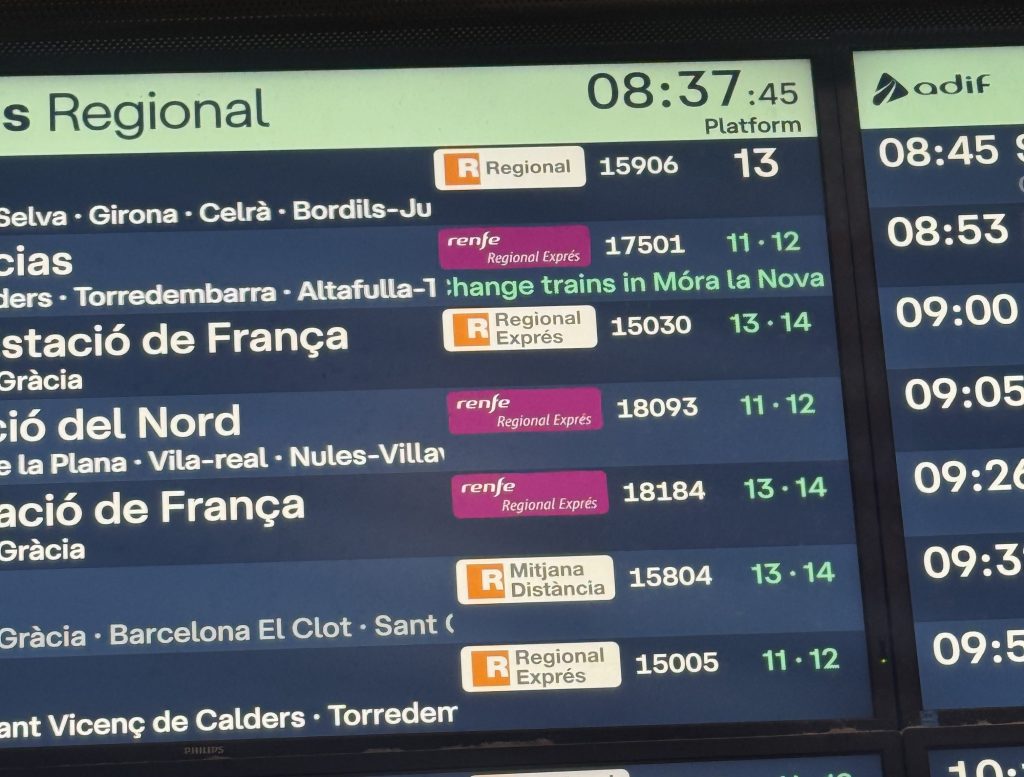
Next, we made our way toward security, where we encountered three access points labeled A, B and C. It wasn’t immediately clear which one we needed, so I asked. No shame in that.
I learned later on that all three actually lead to the same place.
Once we were through to the other side, we grabbed teas and croissants and waited patiently for boarding to begin approximately ten minutes before departure.
The train ride was quick, taking us through more rural areas beyond Barcelona before reaching Girona about 40 minutes later.
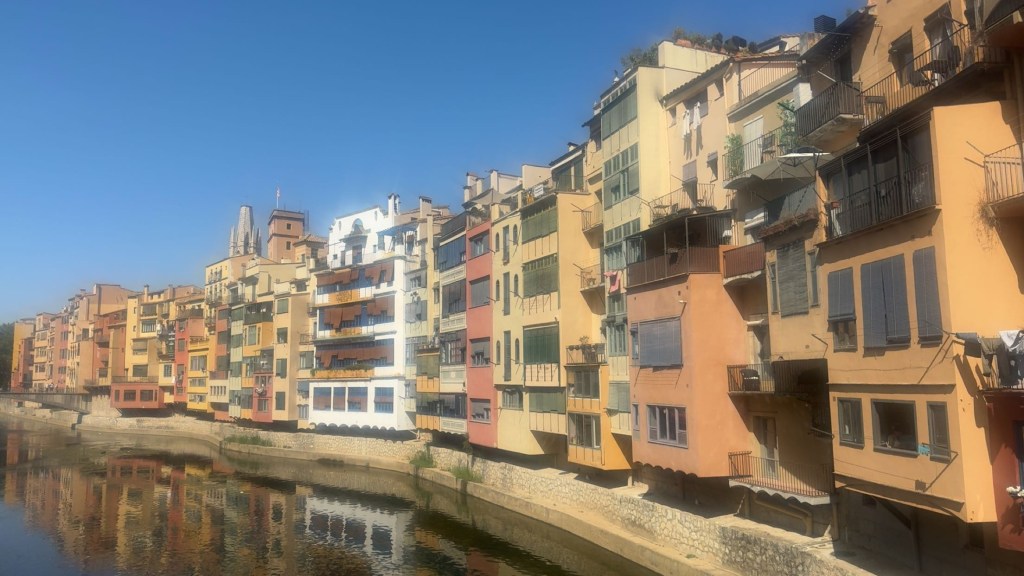
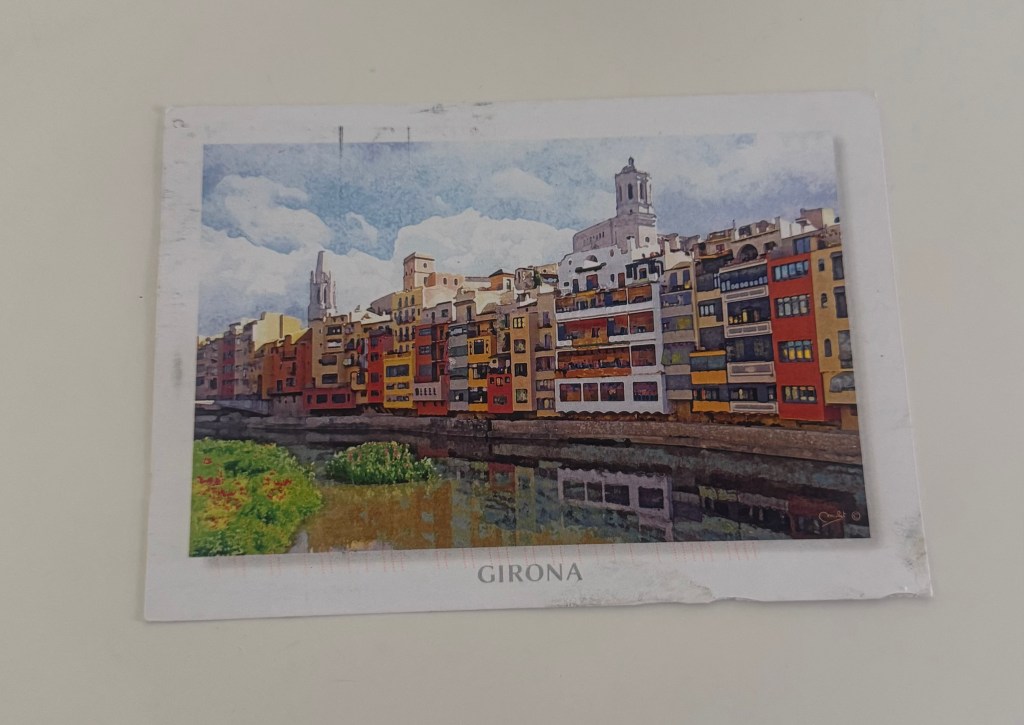
The station is approximately a 15-minute walk from the historic center. As we approached the old city, we were greeted by rows of colorful houses in warm shades of orange, yellow and red lining the Onyar River.
As luck would have it, our trip fell on the first Sunday of the month, when some of Girona’s museums offer free admission. We had already tentatively planned to visit the Museum of Jewish History, so the timing worked perfectly.
We made our way there, sauntering through narrow, winding cobblestone streets and climbing stone staircases that propelled us farther up the city’s hills. We passed the cathedral area, admiring its enormous Baroque façade and seemingly endless staircase from below but deciding to skip the interior tour.
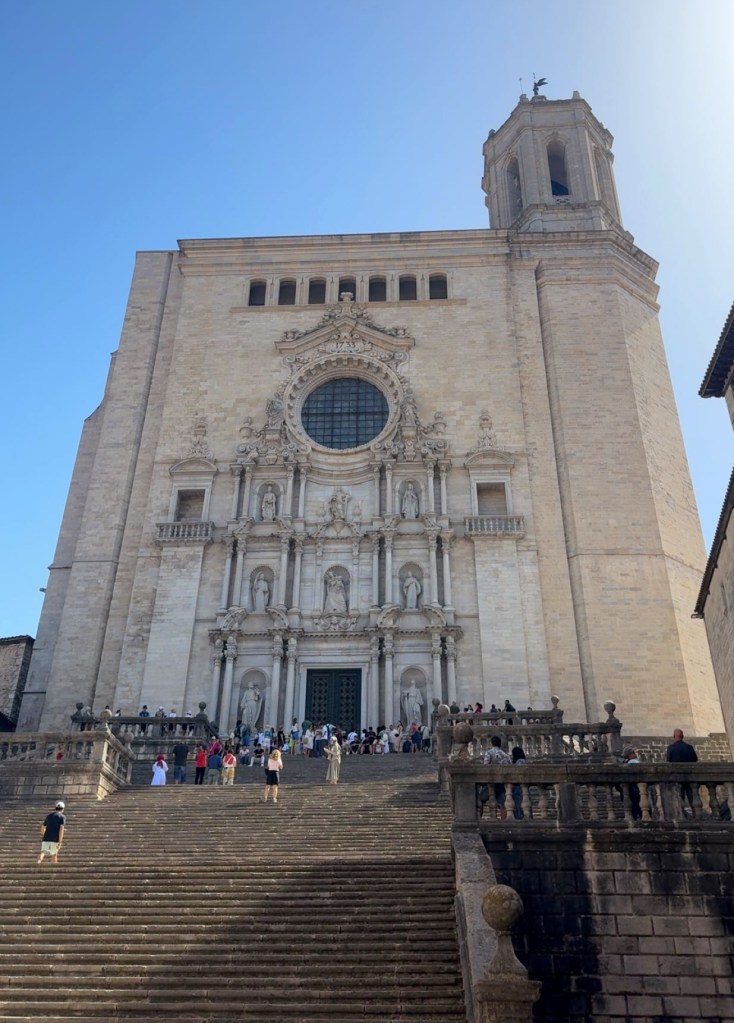
Girona’s elevated historic center and fortified walls make sense for a city shaped by centuries of defense. For its former residents, the geography provided protection against invasion. For our calves, it provided a lot of exercise.
The Museum of Jewish History is located in the historic El Call, the neighborhood once occupied by Girona’s medieval Jewish community.
The museum isn’t huge. It took us less than an hour to make our way through the exhibits, but it is packed with information about the region and its inhabitants—from the arrival of Girona’s first documented Jewish families in the ninth century to their contributions as doctors, scholars, merchants and moneylenders, and finally the persecution that culminated in their expulsion in 1492.
Among the objects that stood out to me were a 19th-century Sefer Torah and a collection of medieval Hebrew tombstones.
On the way out, we tossed a few euros into the donation jar and we headed toward our next stop: the ancient Arab Baths.
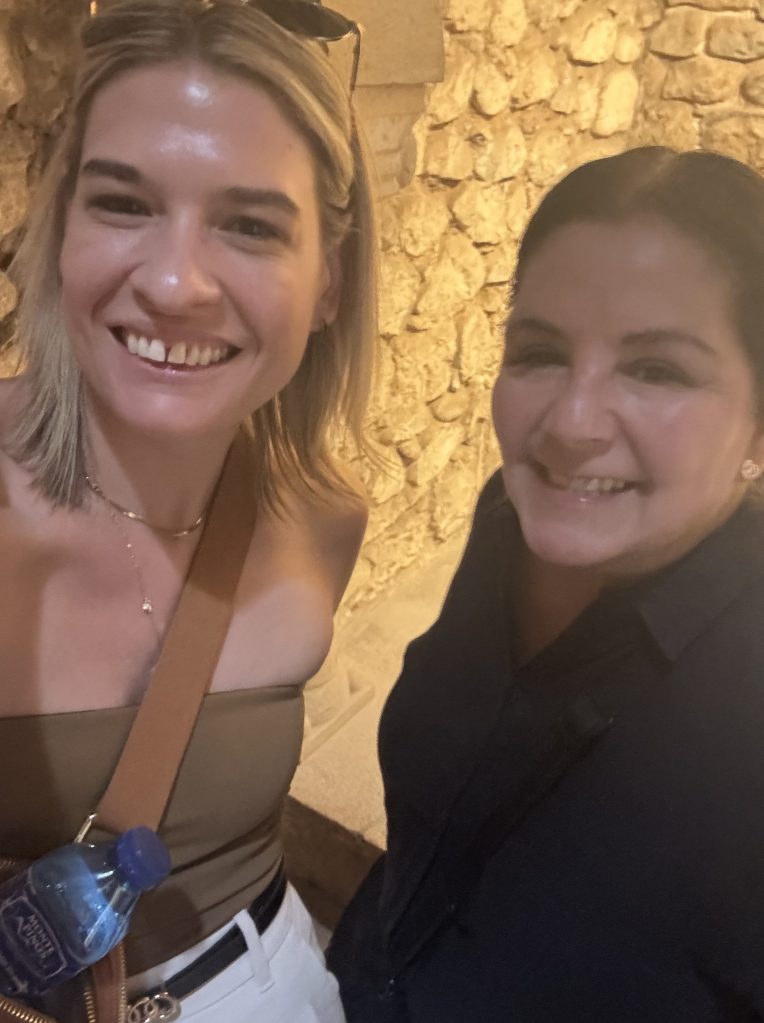
The baths are located approximately 400 meters from the museum, and the entry fee is a very reasonable three euros—cash only, though!
Despite their name, the Arab Baths are a Romanesque structure inspired by Roman and Muslim bathing traditions. The exact construction date remains unknown, but the first written mention of public baths in Girona dates to 1194.
The self-guided tour begins in the apodyterium, which served as the entrance and changing area. It features an octagonal pool surrounded by eight columns supporting a domed ceiling.
From there, Girona’s medieval spa seekers would move through a series of adjoining rooms, including a cold room, warm room and hot room. An AI-generated reconstruction video helped us visualize what the baths may have looked like and how they functioned centuries ago.
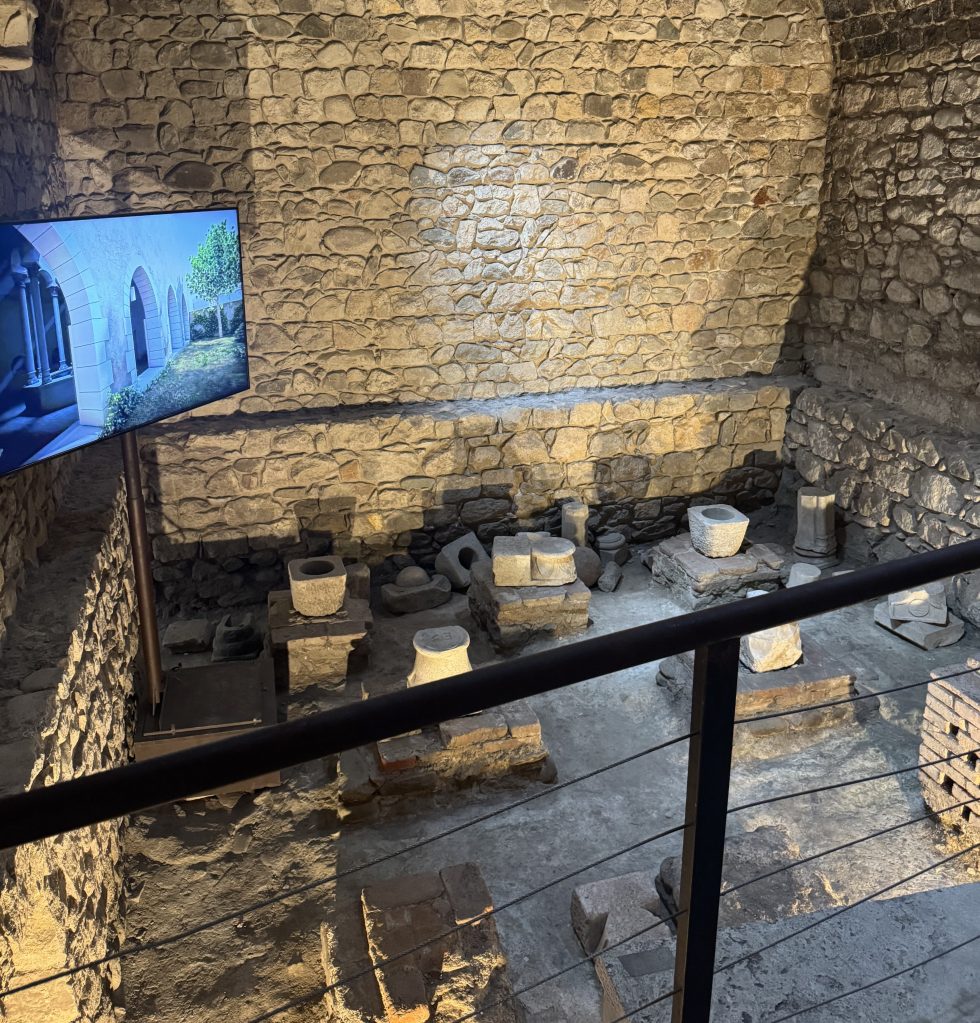
Fascinatingly, I learned that hot air from a nearby furnace circulated beneath the floor through a system known as a hypocaust, heating the warm and hot rooms without affecting the cold bath.
The tour continued up a set of stone stairs to an elevated terrace with views of the Girona skyline. From there, a connecting bridge led us to an iron spiral staircase and the exit, concluding the short but worthwhile experience.
With time to spare before lunch, we departed the Arab Baths for some unplanned exploration, eventually finding ourselves climbing even more stairs toward the Passeig de la Muralla.
The Passeig de la Muralla is a walkway along Girona’s ancient city walls, offering sweeping views over the rooftops of the Old Town and the surrounding countryside. The walls originated with the Romans, who fortified Girona in the first century B.C., and were later expanded and reinforced during the medieval period.
Today, visitors can walk along portions of those centuries-old fortifications, climb their towers and quite literally trace more than 2,000 years of the city’s history.
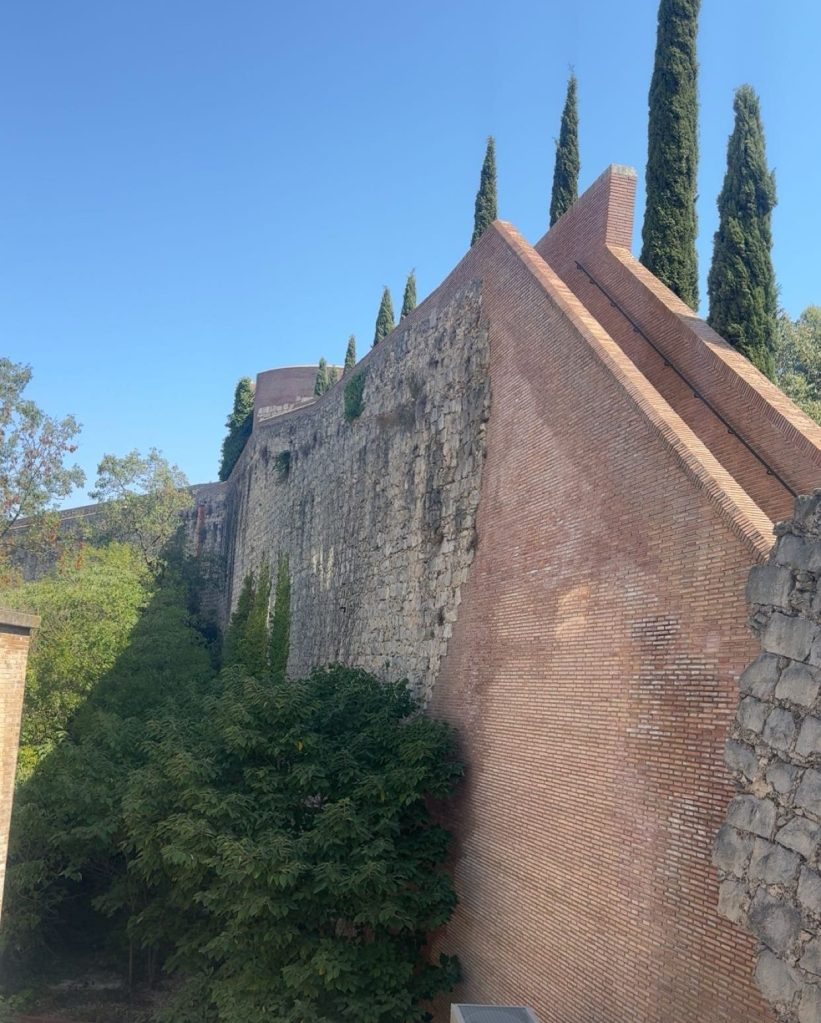
While neither Camerina nor I completed the entire three-kilometer walk—or climbed any towers—we did explore a portion of it to take in the views.
On our walk to the restaurant, we noticed several people in full cycling gear pedaling through the city.
I thought interesting place to ride a bike.
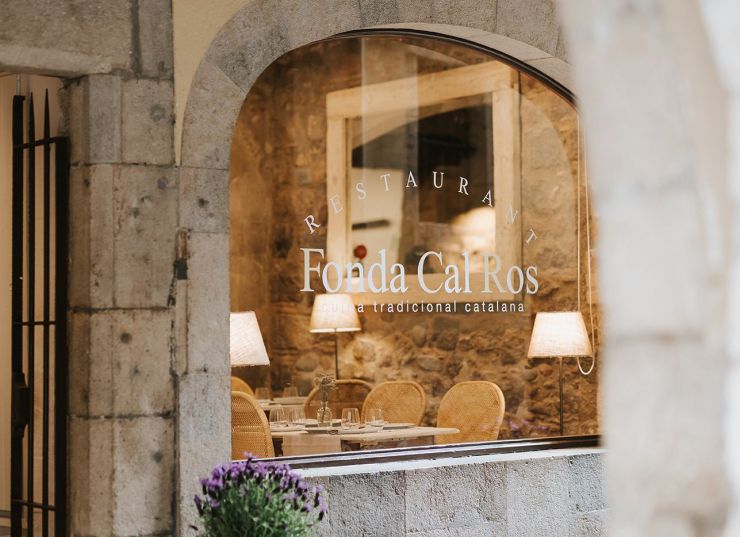
Despite not having a reservation—something I would recommend for a Sunday in Girona, when quite a few restaurants are closed—we managed to score one of the five terrace tables at Fonda Cal Ros.
The traditional Catalan restaurant is located near the center of Girona and, at 1:30 p.m., had only recently opened for business. Consistent with Sundays, the novelty shops and apparel boutiques surrounding us were closed.
The server immediately greeted us with menus and a basket containing fresh sourdough bread, olive oil and two small whole tomatoes.
Camerina and I looked at one another and silently said, Hmm, a word that was starting to sum up a number of our experiences.
Only after watching the couple at the next table did we realize that we were supposed to rub the fresh tomatoes onto the bread before adding the olive oil.
We looked over the menu options, including a 32-euro-per-person fixed menu that appeared to allow us to select a couple of appetizers, entrées and desserts. Because we have a proclivity toward sharing, Camerina and I picked dishes that appealed to both of us and waited for the server to return.
As Camerina began giving our starter choices to the waiter—in Spanish—he politely stopped her and said something my mediocre Spanish skills did not understand. She responded with a look of mild shock.
Apparently, the two separate lists of starters were not asking us to choose one from each.
They were all included.
At that point, we already felt committed, so she continued with our order.
We settled in and began working on the bread basket, slicing the tomatoes in half and copying the more experienced diners to our left.
The street felt slow and quiet that Sunday, aside from a bachelorette party in matching T-shirts walking by while belting out Rihanna and the occasional cyclist on their way to God knows where.
The cyclists hadn’t escaped Camerina’s attention either, and we agreed that a city composed of staircases and hills would be the last place you would catch either of us riding a bike.
We Googled “biking” and “Girona” and quickly discovered that Girona is a major cycling destination, attracting riders from around the world.
Who knew—aside from thousands of cyclists, of course?
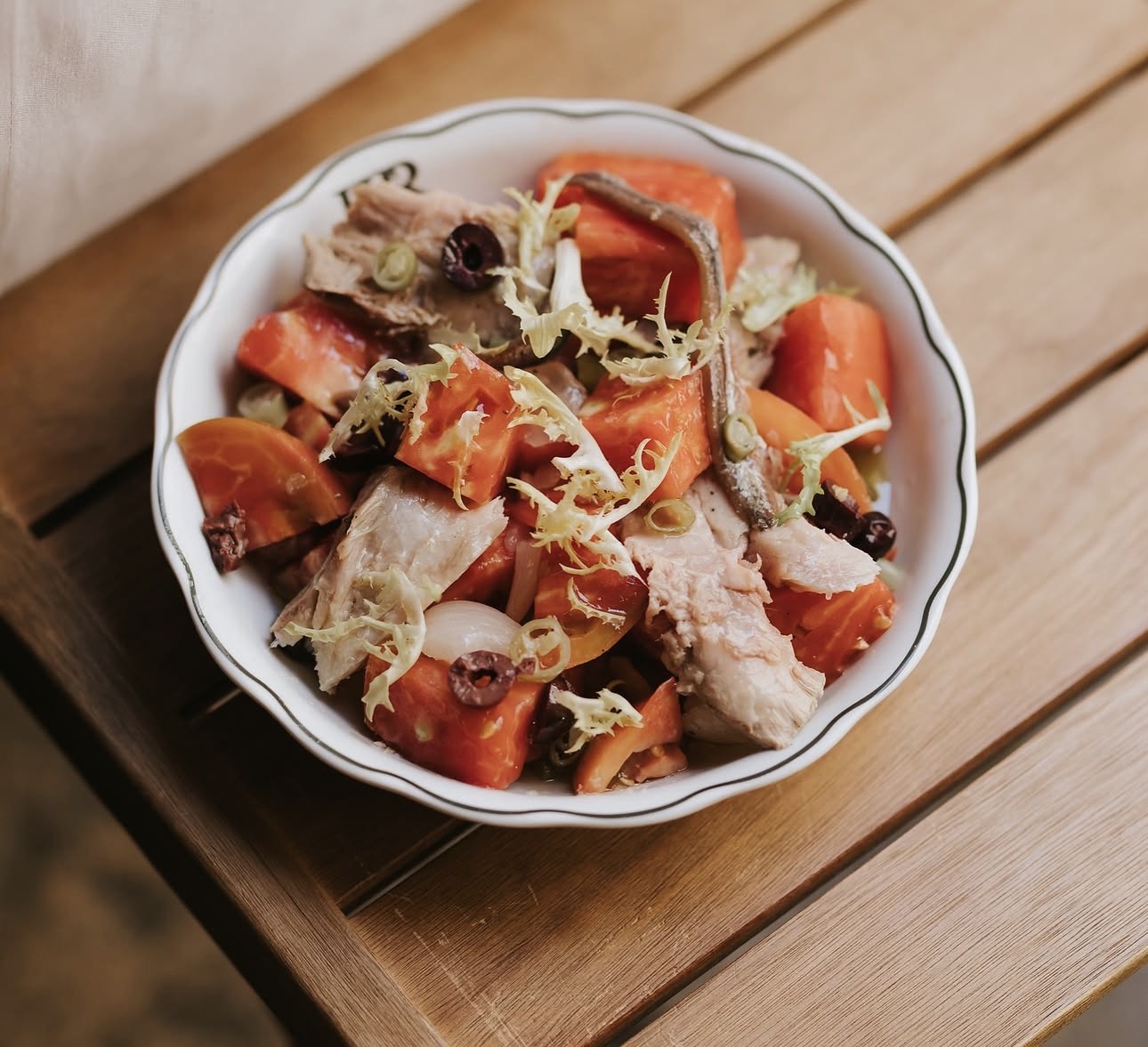
The first starter arrived quickly: tomatoes with tuna belly. That was followed by something I can’t quite recall—roasted vegetables, maybe—and something I could never forget based on appearance alone: whole, almost cartoonish sardines with tapenade on crostini.
After some time, the waiter came over to clear a few plates during one of his loops around the terrace, which had filled over the course of the last hour.
Camerina and I assumed the entrées would be coming next. Instead, he returned with two more starters, a white bean dish and zucchini ribbons.
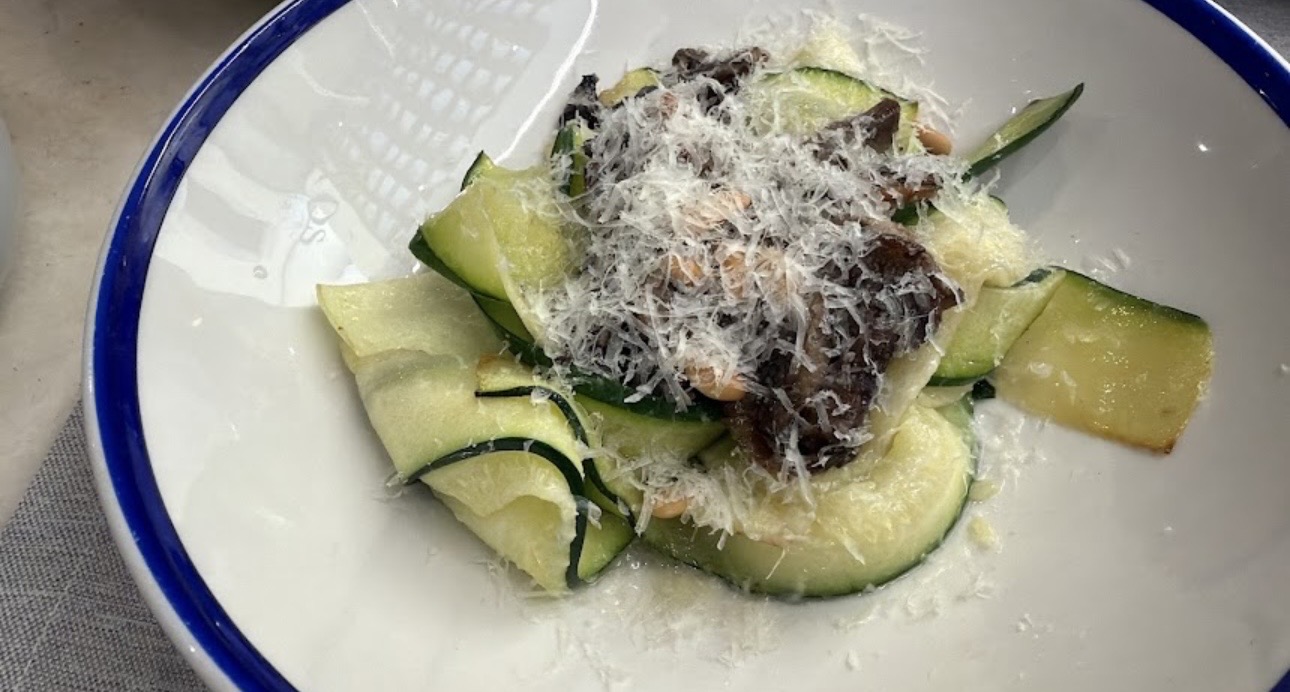
We continued indulging in the new arrivals while attempting to finish what was already present on our ever-shrinking table.
Eventually, the entrées arrived, and we parted ways with what we could not finish from the double feature of starters.
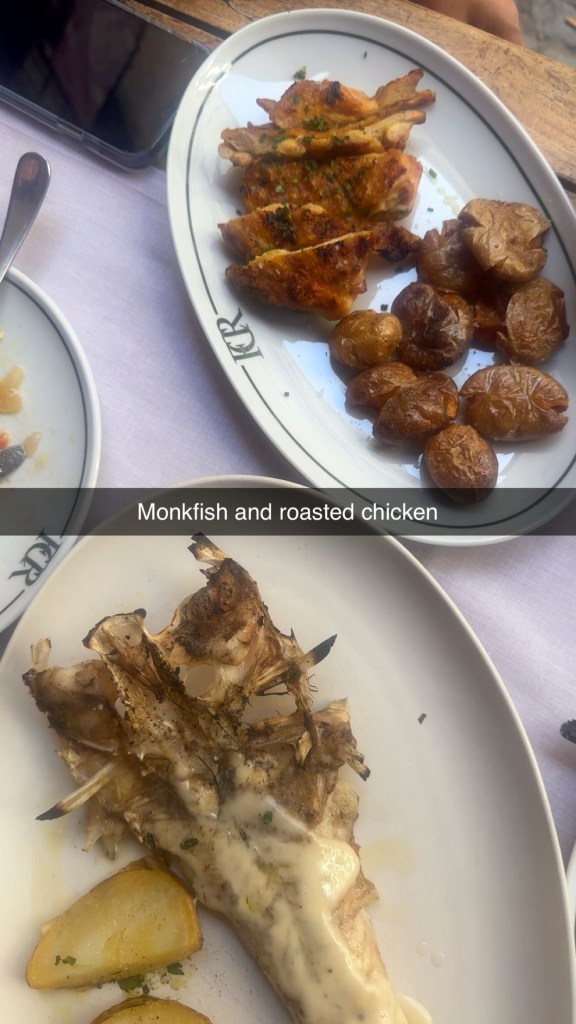
One of the dishes that had intrigued us was the monkfish with beurre blanc sauce, and it did not disappoint. It was my first time trying it and the fish was tender, with the sauce adding a rich, creamy texture.
For anyone who has never had monkfish, I do not recommend Googling a picture of it beforehand.
By the time we reached dessert, we were very full. But what we lacked in stomach space, we made up for in determination—at least enough to try a few bites of cheesecake and roasted pineapple with cream.
When we finally paid and left, we realized two and a half hours had passed, and it was almost time to head back to the train station.
On the way, we made a quick detour to mail a postcard from the Girona post office and arrived at the station 40 minutes before our train.
The Girona station was much smaller than Barcelona-Sants, and we learned that security does not allow passengers to go down to the tracks until approximately 20 minutes before departure.
A girl sitting next to me asked if I was going back to Barcelona. She wanted to confirm that she was waiting for the right train.
Funny. The morning had begun with me standing confused inside Barcelona-Sants, trying to navigate my way somewhere unfamiliar. Five hours later, someone was looking to me to ease her own travel anxiety.
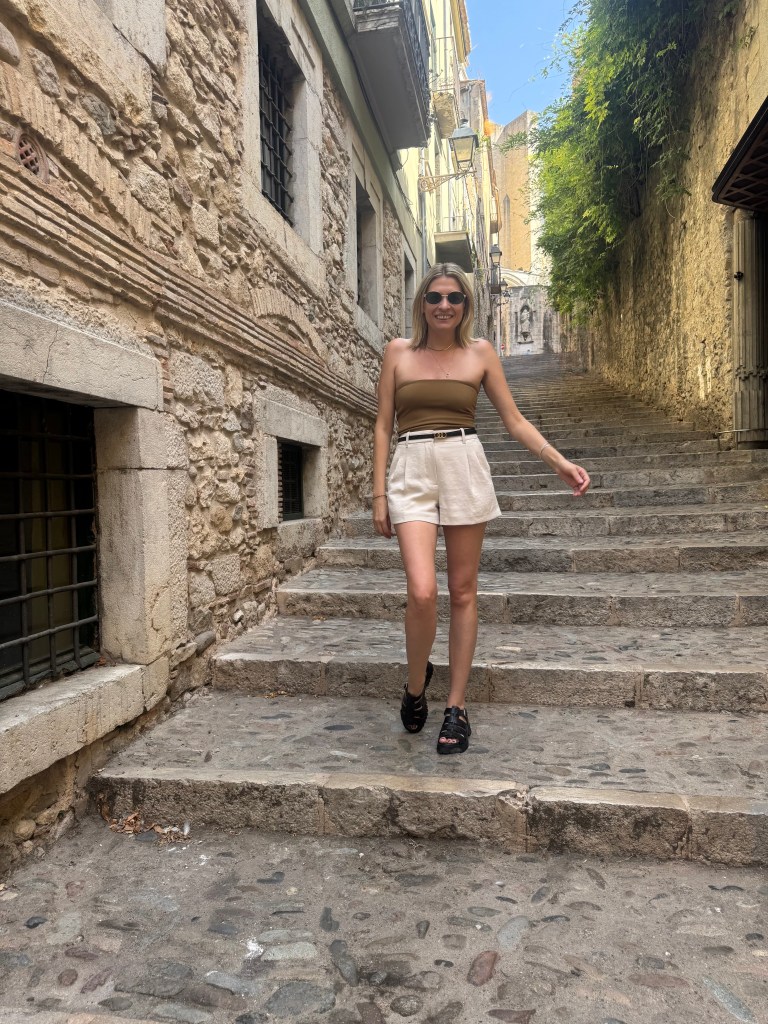
We certainly hadn’t experienced Girona in its entirety. There were still Roman walls to walk, restaurants to try and stairways to climb.
But five hours had been enough to glimpse its history, eat our weight in Catalan food and, apparently, make me look like someone who knew exactly where she was going.



Leave a Reply