I knew I wanted to stay in a rental apartment during my time in Barcelona.
A hotel was never even considered.
I easily pinned seven or more flats before committing to this particular one, from which I write this now.
In addition to my desire for a space with a living area and the ability to prepare small meals, I wanted to stay in a neighborhood where residents might actually live.
The listing covered both my wants and needs: air conditioning, two bedrooms, a balcony, metro access, a historic area, etc. It was described as being “located in a unique area in the Gothic Quarter” and, on the map, looked tucked away from the main drag.
So I booked it.
Upon arrival, I learned my apartment is located in Plaça dels Traginers, a place I’ve now had the opportunity to observe and immerse myself in for three weeks.
The square is pedestrian-only, with cars forbidden. It is relatively small compared to many of the other plazas nearby. But what it lacks in size, it more than makes up for in character.
Its most striking feature is a section of the old Roman defensive wall, including one of the surviving towers that once formed part of the fortifications protecting the city of Barcelona.
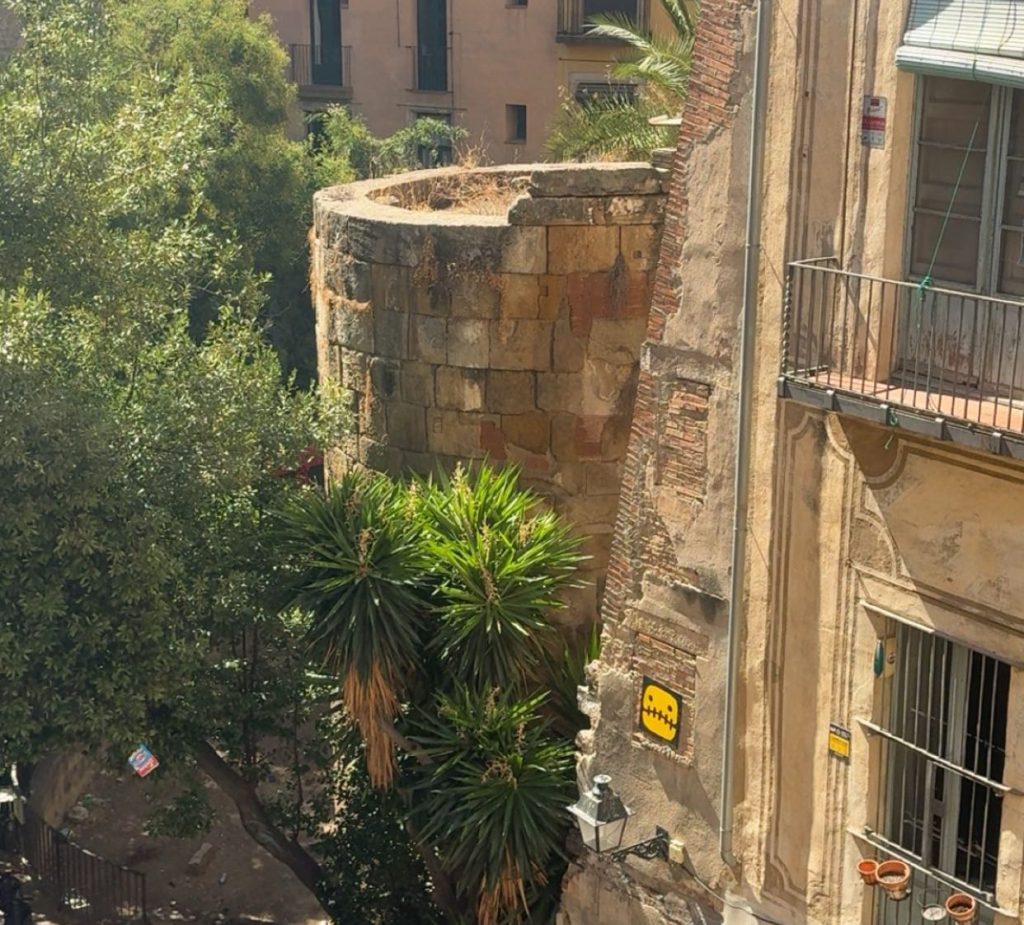
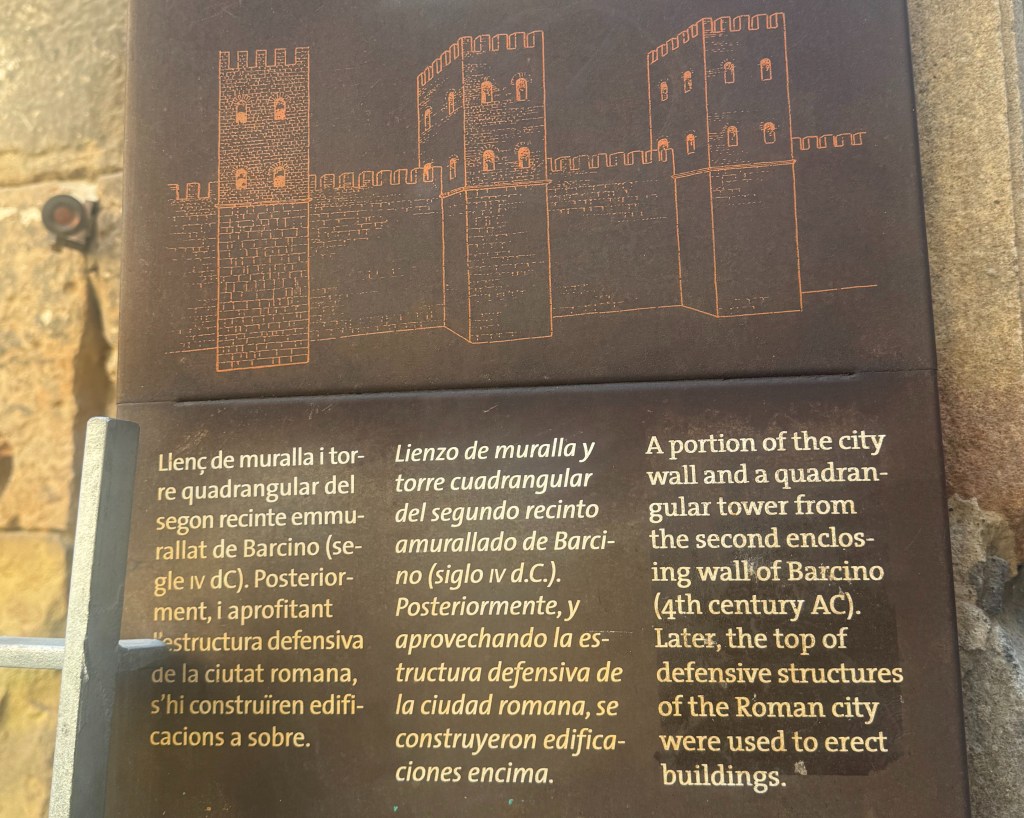
Ten or so apartment buildings, dating from the 19th and early 20th centuries — mine is from 1880 — frame the circular space, with cafes, bars and vintage shops operating on the ground floors of some of them.
In the early mornings, Plaça dels Traginers is very quiet. The shops are closed and the terrace tables hidden away inside restaurant interiors. Aside from the sporadic straggler cutting through on their way to work, the plaza feels almost empty.
Around 10:30 a.m., it begins to slowly stir. Shopkeepers open metal shutters and put out A-frame signs to signal they are open for business. My neighbor in another building feeds her baby on the balcony of her efficiency apartment.
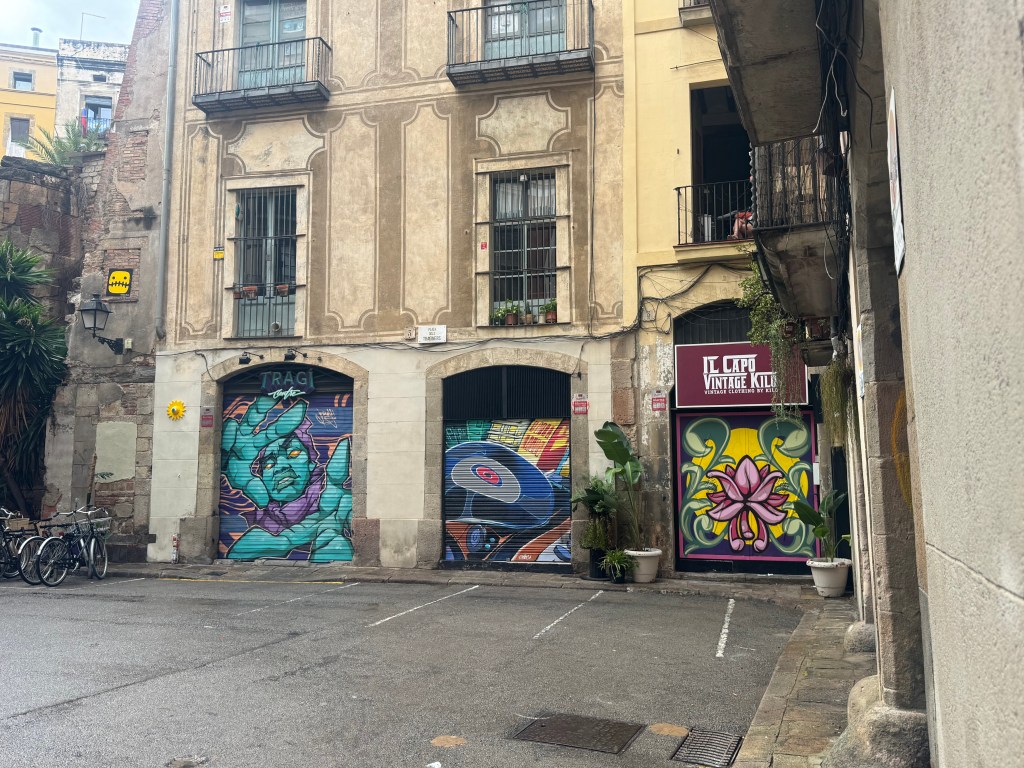
Foot traffic starts to increase as tourists rise from their slumber and cut through the plaza on their way to the main roads.
Around 11:30 a.m., Babel, one of the cafes in the plaza, begins setting up for service, dragging the aforementioned patio tables from their resting places to their space on the terrace and putting out a chalkboard menu advertising tapas.
They see their first guests trickle in shortly after opening, perhaps stopping for an aperitivo before a long lunch or settling into a long lunch of tapas and conversation right where they are.
I usually return home from my day’s activities around 3:30 p.m.
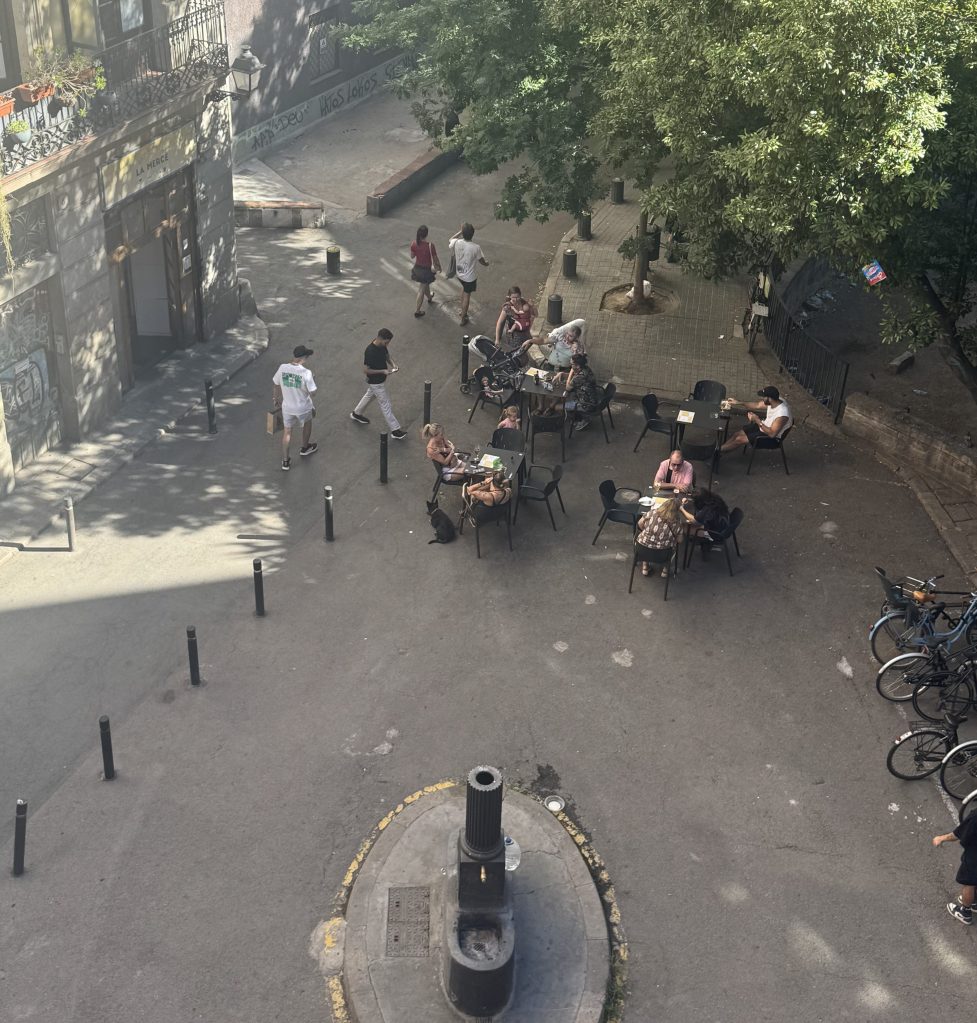
Just in time to see the waiter at La Mercè, the cafe directly below my balcony, opening the doors and setting up tables in a space just off the main terrace area.
After a couple of weeks of seeing me coming and going from my place, we’ve started waving to one another.
I’ve taken a liking to sitting on my balcony for some rest and relaxation in the afternoon — despite the noise created by my elderly neighbor in building two, who insists on banging pieces of metal together and calling it music.
Sometimes the woman in building three appears in what I am now calling her uniform — a T-shirt that’s a little too short and flesh-colored panties — and yells at him to stop.
Quite a few times, I’ve seen a little white Chihuahua running around, curious as to whom he belongs.
As I sit in my wooden chair, I watch the influx of pedestrians pass through. They often completely miss the Roman tower, and I sometimes want to yell, “Hey, look over there! You are walking past something amazing.”
Maybe they’ve already seen it and it has lost its luster. But for me, I don’t think living next to history ever will.
My balcony is also directly above a historic 1867 water fountain, once an important part of everyday infrastructure for the people who lived in this plaza, when not every building would have had running water.
By evening, the plaza begins to transform from a quiet square into a lively epicenter of music, conversation and social gathering.
The street musicians show up and take their seats on the small stone wall lining the path through the plaza.
It is mostly the same group of local performers each day: a solo musician dressed entirely in black with horns on his head, another group of four, and a few other individual performers who rotate through.
They seem to know each other, chatting between sets, listening to one another perform and effortlessly sharing the stage. Each has their own style, and the variety gives the plaza a bohemian vibe unlike what you’ll find in many of the other squares nearby.
Tables become hard to come by and stay filled late into the evening.
The first time I ventured down into the plaza, I went to La Mercè, staying for just a beer and some olives. That was where I wrote my blog post, My Unexpected First 72 Hours in Barcelona.
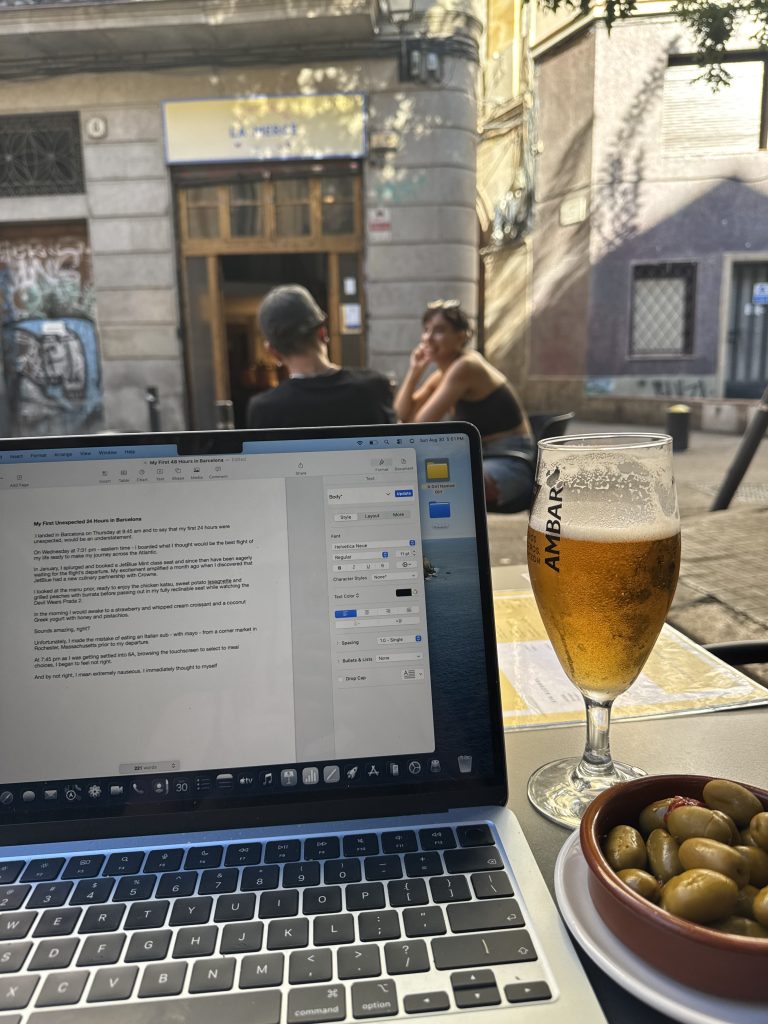
My second time, I sat at a table on the main terrace that I thought belonged to Babel, only to find out it was actually part of another restaurant, El Salón — a welcome surprise, since I already had it on my list of neighborhood restaurants to try.
That was when I realized three cafes and restaurants actually share the terrace space. El Salón and Carlos and Matilda’s each occupy three tables on the outer left and right sides, while Babel takes up the center.
On my next trip to the plaza, I decided to try Carlos and Matilda’s, a bar that had been intriguing me since my arrival.
Just from walking by — countless times, as it is on my direct path home — I knew this place had its regulars. I often saw the same few people sitting outside on the bench directly under the window into the bar.
I later found out the bench is a bit of a loophole: you can store your drink inside while sitting outside and comfortably smoke as many cigarettes as you’d like.
When I arrived, the bar was surprisingly slow. I ordered a gin and tonic with the intention of staying for just one — famous last words.
It began to pick up, with people continuously cycling through, some staying longer than others — myself included.
I started chatting with the staff and some of the other patrons who trickled in. Some were tourists, like me, but a lot of the people I spoke with actually live in Barcelona and call this bar their favorite.
I laughed when I saw the same white Chihuahua sitting on top of a dog bed on an untapped keg, finally discovering that he belongs to the owner of the bar.
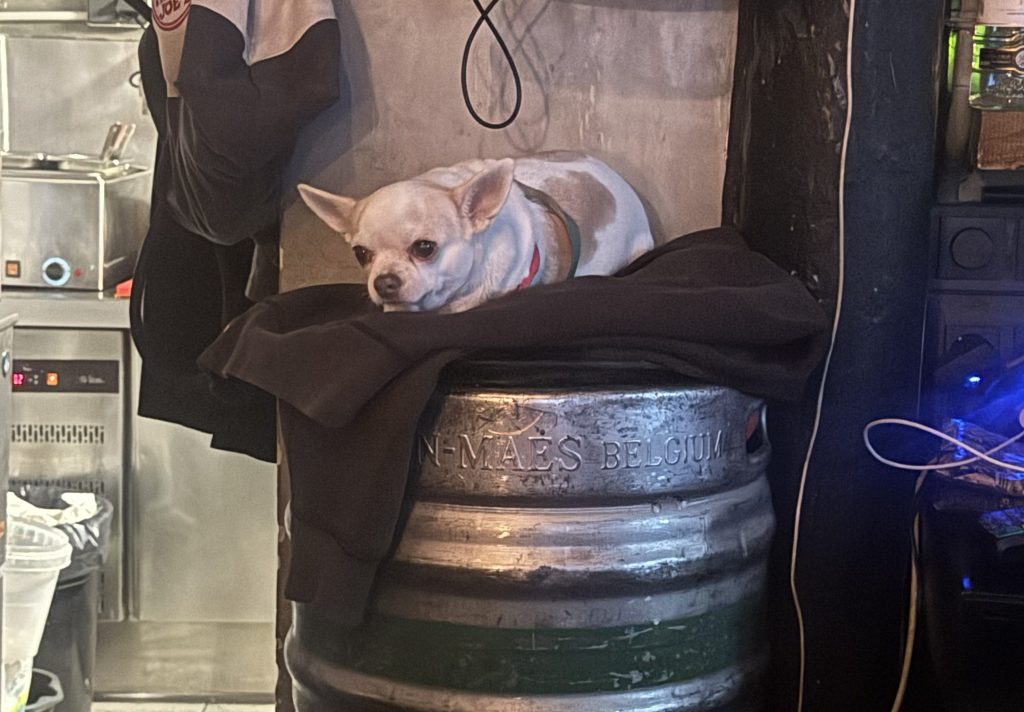
When I left that first night, I knew it would not be my last time there.
And it was not.
I’ve been to Carlos and Matilda’s a handful of times now, bringing along a friend who was visiting and even some randoms I met one night at another bar. The staff recognizes me, saying hello when they see me walk by, and I’ve started to recognize some of the regulars too — and vice versa.
Somewhere along the way, I stopped having to think about how the plaza worked. I know which tables belong to which restaurant, when the musicians will begin to arrive and which faces I’m likely to see when I walk through. What was unfamiliar three weeks ago has quietly become part of my routine.
When I walk back to my apartment later in the evening, the plaza is still very much alive. The tables on the terrace are still full of people drinking Aperol and Moritz and will remain that way until the bars close down.
Back on my balcony, I can hear the musicians playing and the chatter of the people below.
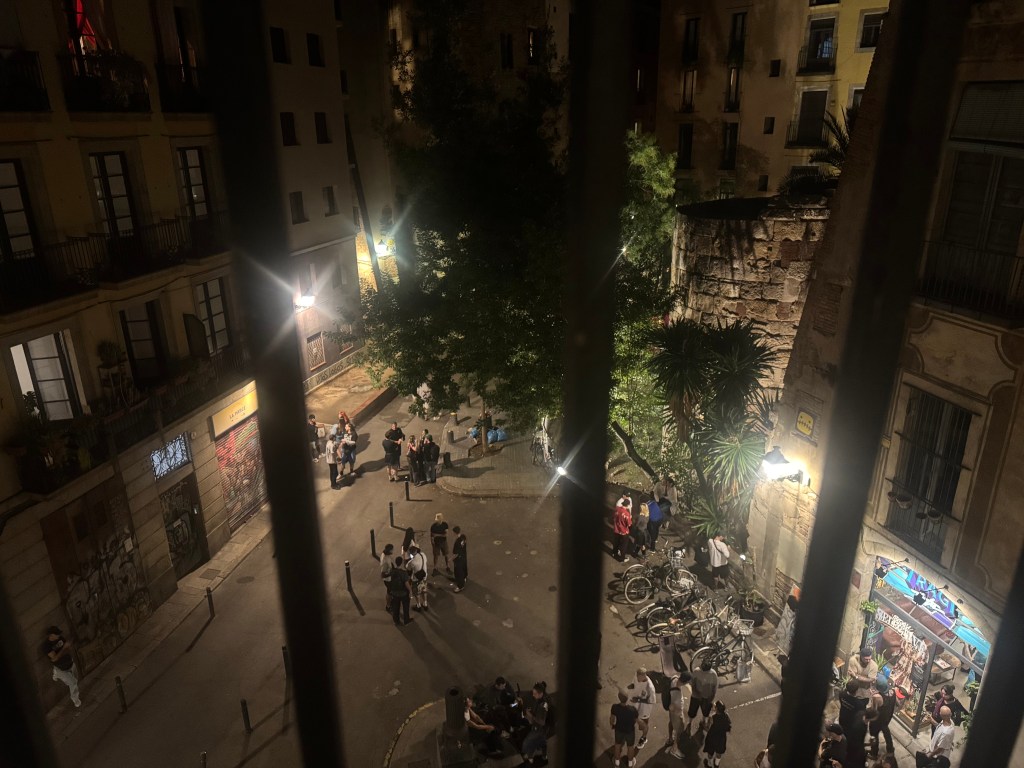
I like to end my evenings standing out there, looking down at the people below. Sometimes I catch them looking up at me too.
I wonder if they think how lucky I am to live in such a place.
Little do they know, I’m just trying it on for a little bit.
And it fits great.



Leave a comment